1
Organizational Design
Clarify roles, spans, layers, decision rights, and leadership capacity.
OPERATIONAL STRATEGY FOR COLLISION ORGANIZATIONS
Twin Pillars helps growing collision organizations replace fragmented operating practices with clear roles, connected workflows, and measurable accountability through the OPTIMUS™ Framework.
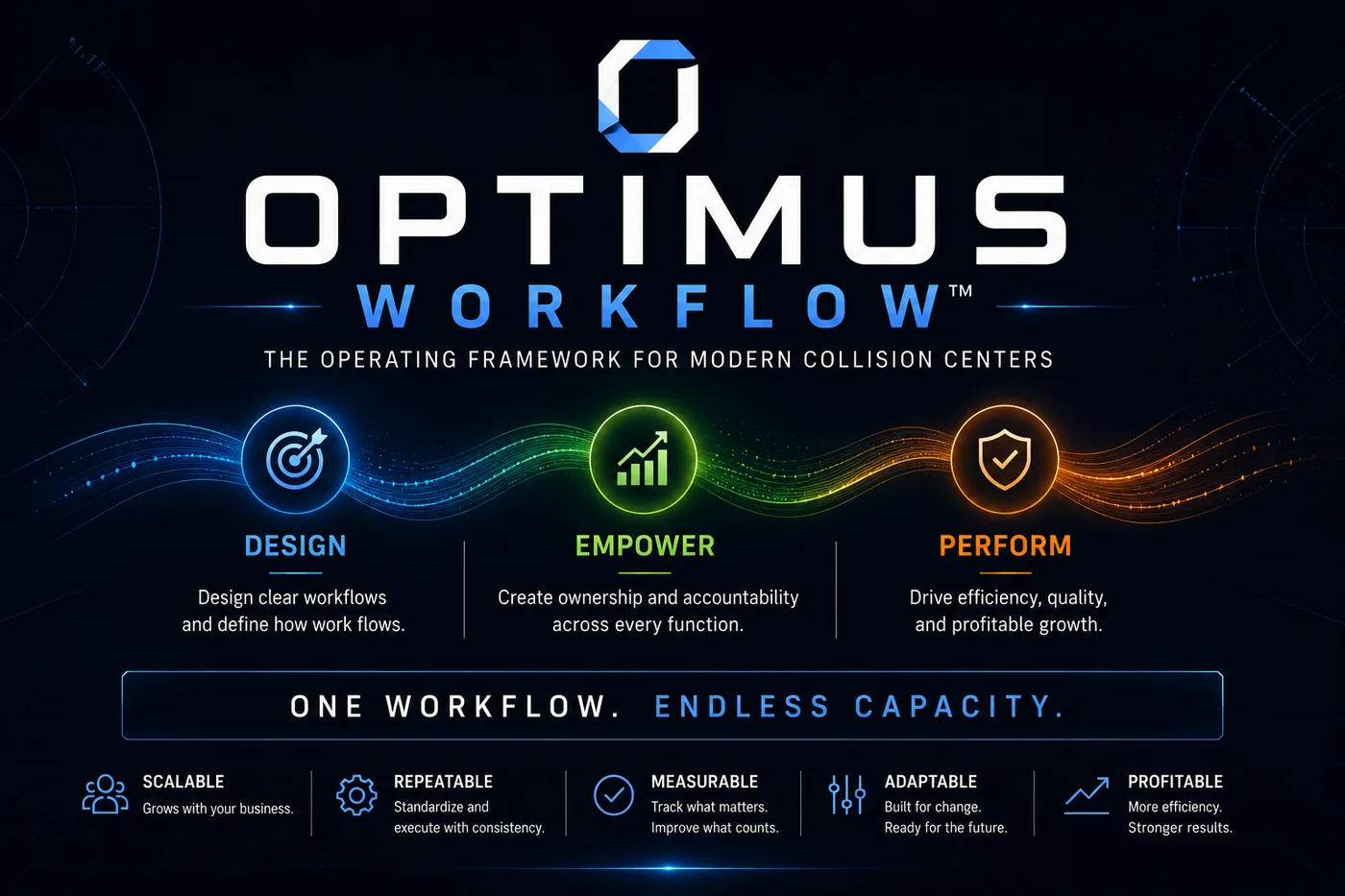
The growth problem
As collision organizations add locations, the old structure often creates more coordination, more escalation, and less accountability. Growth becomes harder because the system was never redesigned for scale.
Roles evolve informally, accountability overlaps, and leadership capacity gets consumed by daily firefighting.
A structured operating framework connecting organizational design, leadership ownership, management cadence, and performance systems.
Clearer decisions, stronger leaders, consistent operating rhythm, and more capacity for growth.
The framework
Clarify roles, spans, layers, decision rights, and leadership capacity.
Create explicit ownership for outcomes, not shared ambiguity.
Build consistent routines that convert strategy into daily performance.
Establish a focused scorecard and disciplined review cadence.
Reduce dependence on individual heroics and informal workarounds.
Create a management system that keeps learning after implementation.
A system leaders can see
OPTIMUS™ connects workflow design, role clarity, centralized support, performance intelligence, and execution discipline in one operating architecture.
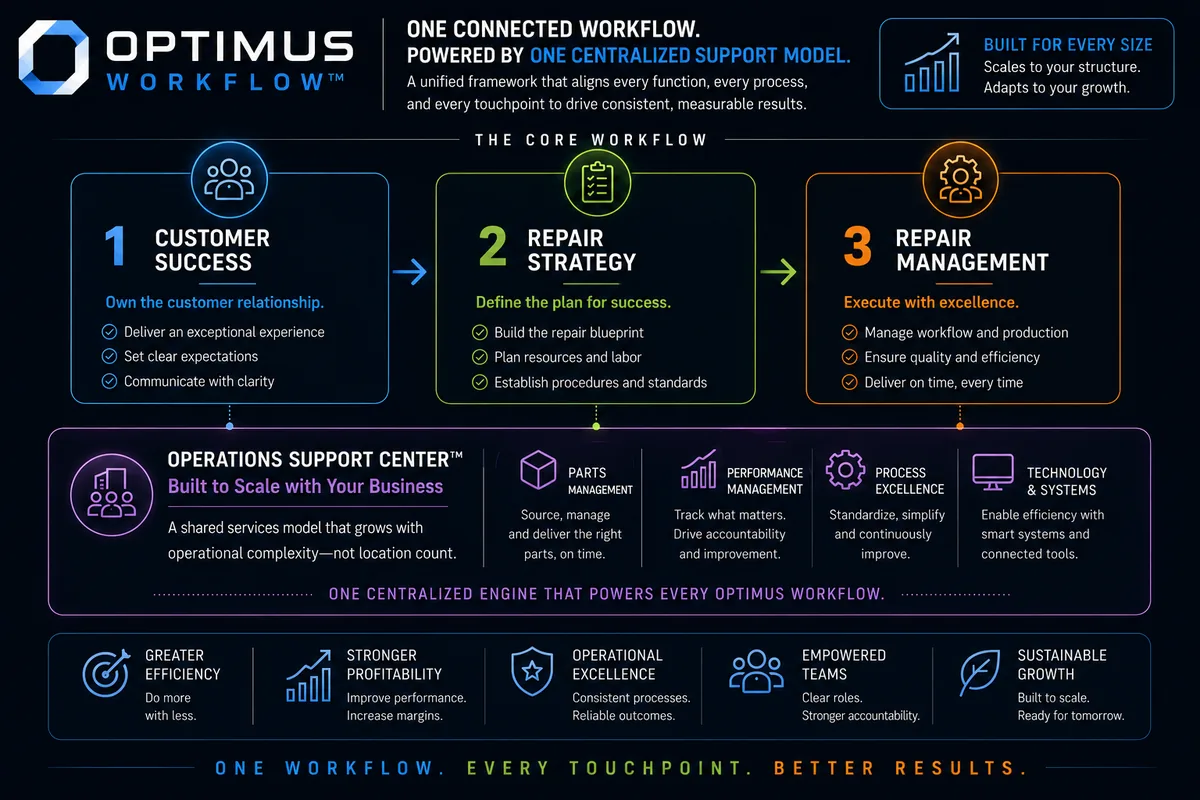
Define how customer success, repair strategy, repair management, and centralized support work together.
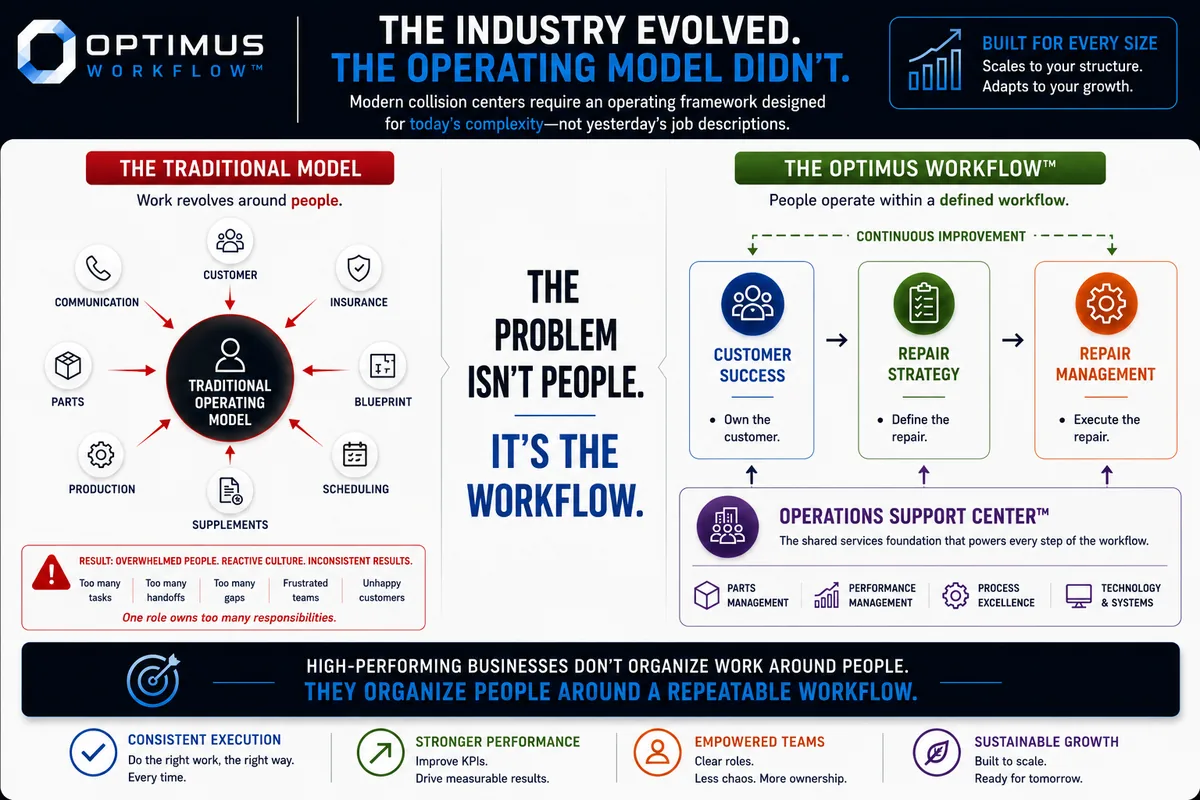
Move work away from overloaded individuals and into explicit roles, routines, and decision rights.
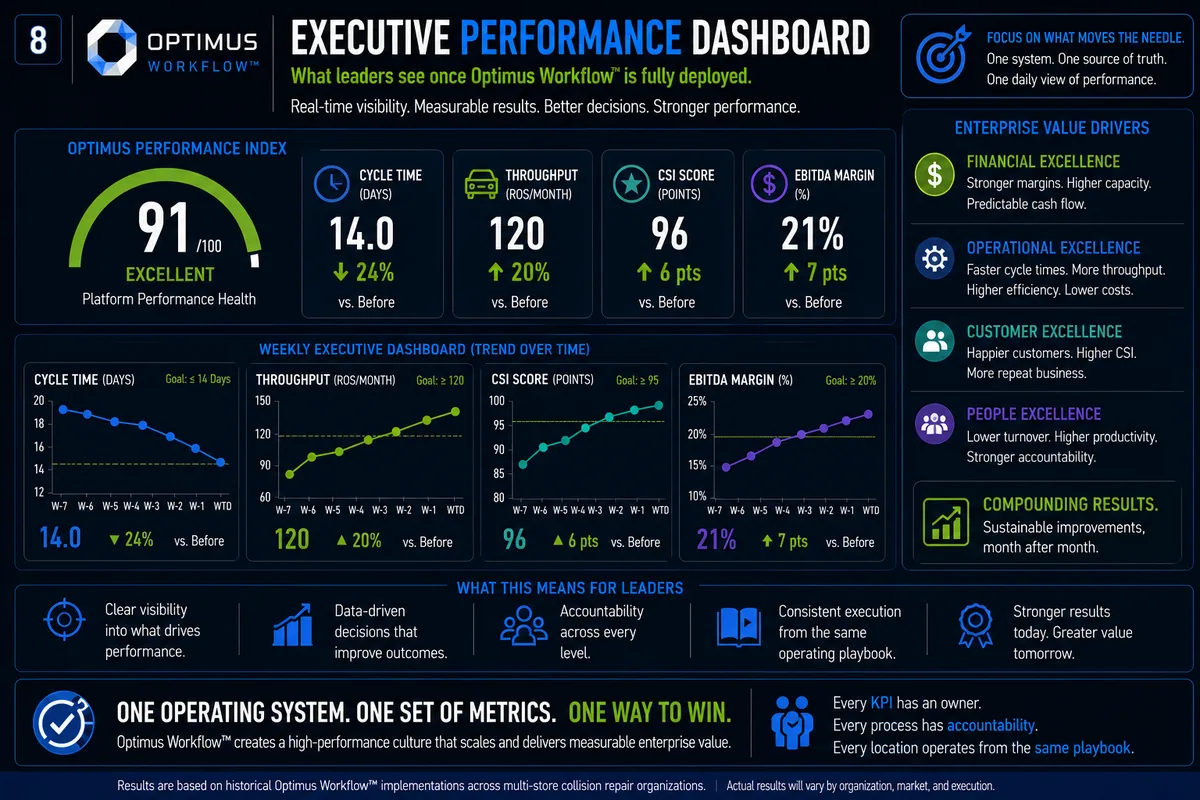
Give leaders one view of the metrics, trends, and actions that drive platform performance.
Operator perspective
“The goal is not a thicker playbook. It is a clearer organization that executes better.”
Javier brings more than two decades of collision-industry leadership, multi-site operations experience, P&L responsibility, field execution, and ownership perspective. OPTIMUS™ was developed from the recurring organizational problems that appear when strong operators outgrow the structure that helped them get started.
Meet Javier →Start with clarity
A focused executive engagement that identifies the organizational constraints limiting performance and produces a practical roadmap for the next stage.
Leadership interviews, operating review, role clarity, KPI and management-cadence assessment.
Separate structural issues from isolated symptoms and define the few changes that matter most.
Deliver an executive roadmap with ownership, sequence, and near-term actions.
Next step