
1. Structure
Roles, spans, layers, and decision rights aligned to the organization’s next stage.
Proprietary methodology
A practical operating architecture for collision organizations that need more consistency, clearer accountability, and greater leadership capacity as they scale.
Purpose
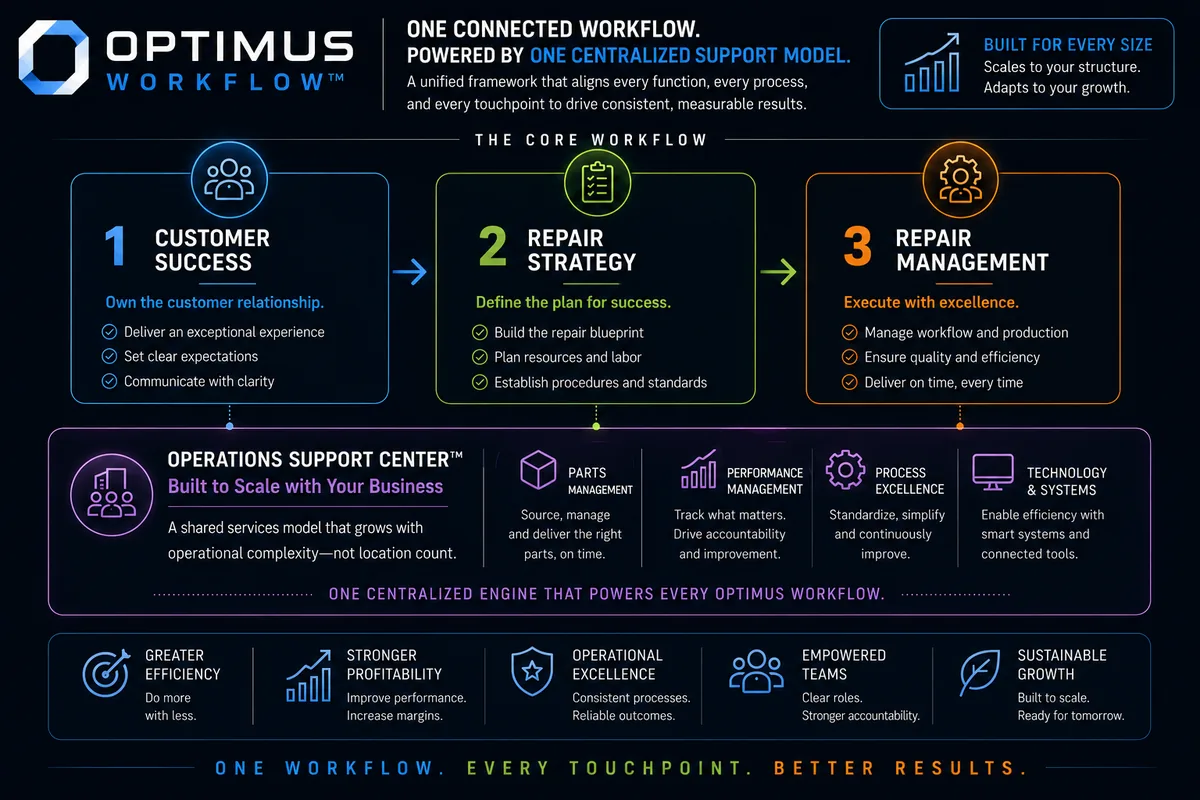
OPTIMUS™ is not a collection of isolated process improvements. It connects the operating model, leadership roles, decision rights, management rhythm, and performance system so the organization functions as one system.
The operating architecture
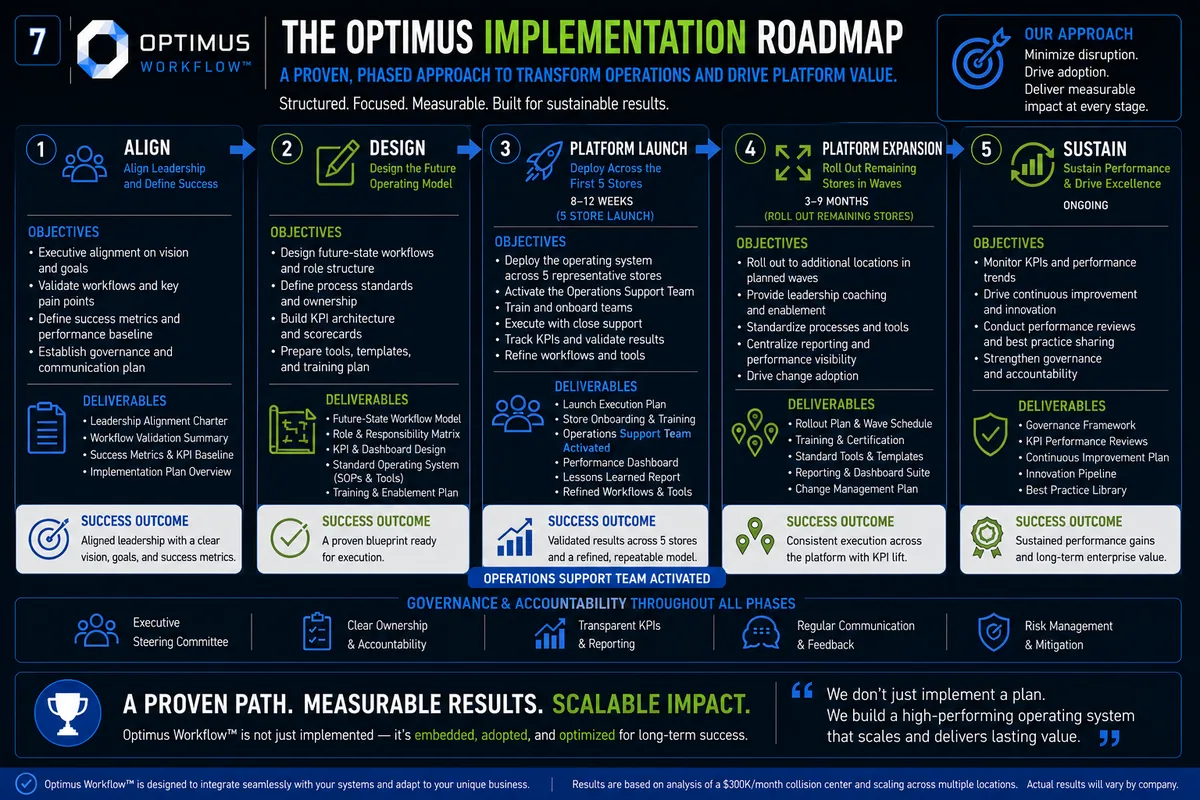
The visual system helps align executives, store leaders, and support teams around the same operating model.
Six disciplines
Roles, spans, layers, and decision rights aligned to the organization’s next stage.
Clear ownership for customer, production, financial, and leadership outcomes.
Work designed to move through the organization without unnecessary handoffs.
Daily, weekly, and monthly routines that surface issues early and drive action.
Metrics tied to decisions, owners, and corrective action—not reporting for its own sake.
Leadership coaching, role adoption, and reinforcement to make the new model stick.
Implementation path
Understand the current operating model, constraints, leadership capacity, and performance rhythm.
Define the future-state structure, role charters, decision rights, KPIs, and management routines.
Test the model in a controlled group of locations, gather field feedback, and refine.
Train leaders, sequence rollout, establish governance, and track adoption.
Next step